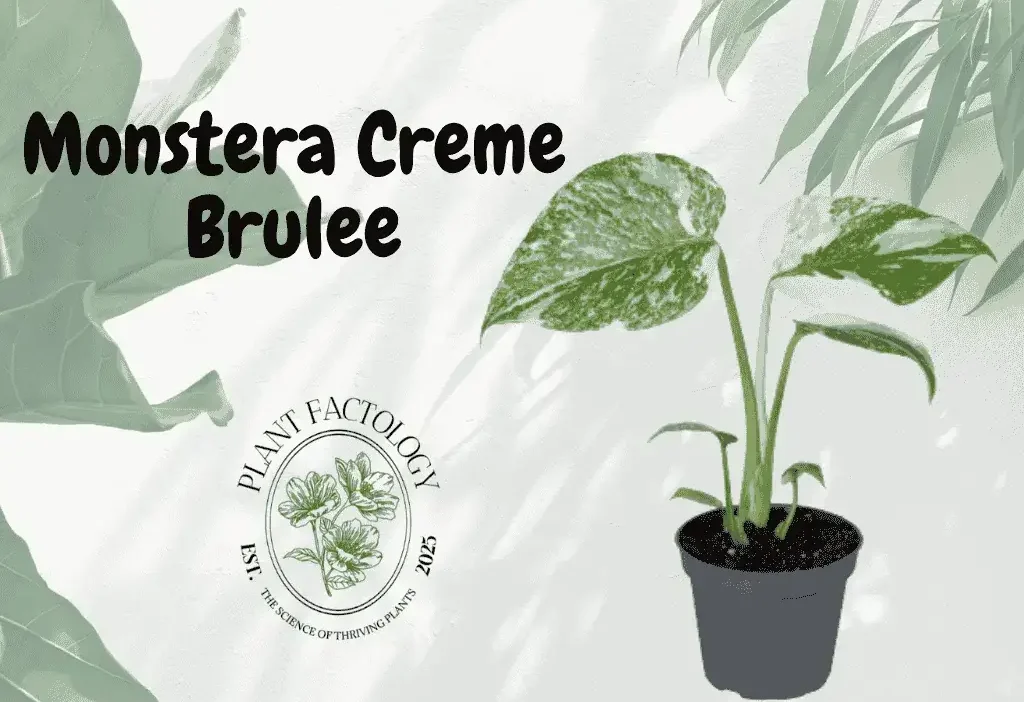
Monstera Crème Brûlée stands as one of horticulture’s most coveted treasures, a living paradox of botanical artistry and genetic volatility.
Named for its uncanny resemblance to the caramelized sugar crust of the classic French dessert, this rare aroid hybrid captivates collectors with foliage that appears dusted in toasted amber and cream.
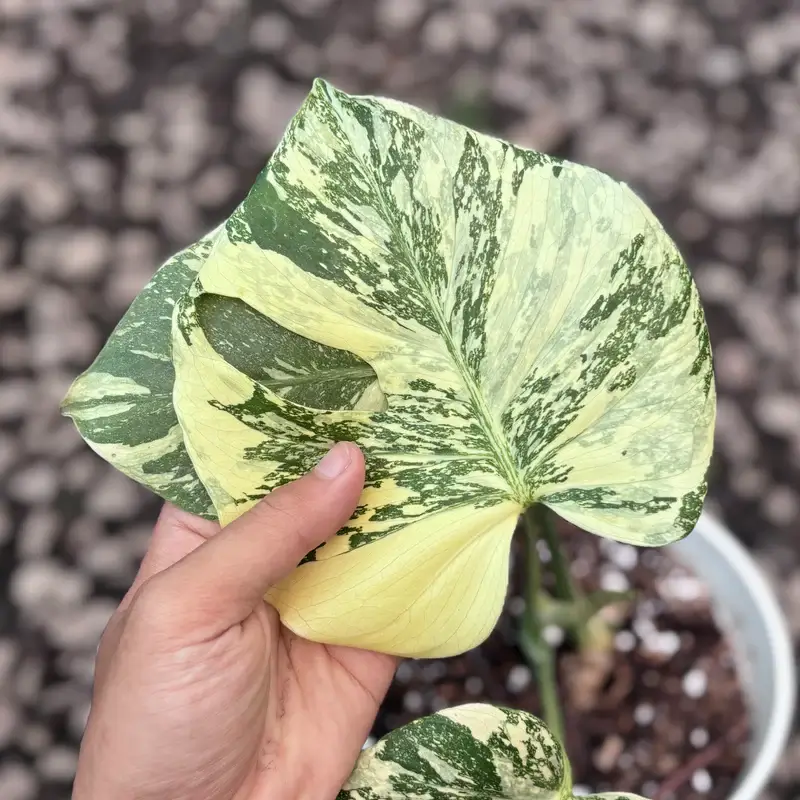
Unlike stable variegated varieties, each Crème Brûlée leaf unfurls as a genetic lottery ticket, with sectoral chimerism creating unpredictable caramel-splashed patterns that can regress without warning.
This guide illuminates the mystique surrounding this ultra-rare cultivar, from its disputed Thai origins to the precise environmental alchemy required to sustain its fleeting beauty, while addressing the dessert namesake’s culinary science for curious readers.

Table of Contents
What Is Monstera Crème Brûlée?
It represents a pinnacle of variegated aroid breeding – a sectoral chimera where distinct genetic cell layers create unstable caramel-and-ivory mosaics.
Unlike pigment-based variegation, its golden fenestrations result from light-refracting air pockets within leaf tissues, creating an optical illusion reminiscent of crystallized sugar.
Each plant maintains an evolutionary tension: tropical vigor battles delicate variegation, with light exposure triggering thermochromic shifts toward burnt-orange hues.
Fewer than 200 verified specimens exist worldwide, primarily propagated through high-risk tissue culture due to frequent reversion in traditional cuttings.
You May Also Like: The Amazing Arboricola Plant: Easy Care for Stunning Greenery
Crème Brûlée and Thai Constellation: Spot the Difference
The distinction between these prized Monsteras transcends mere coloration.
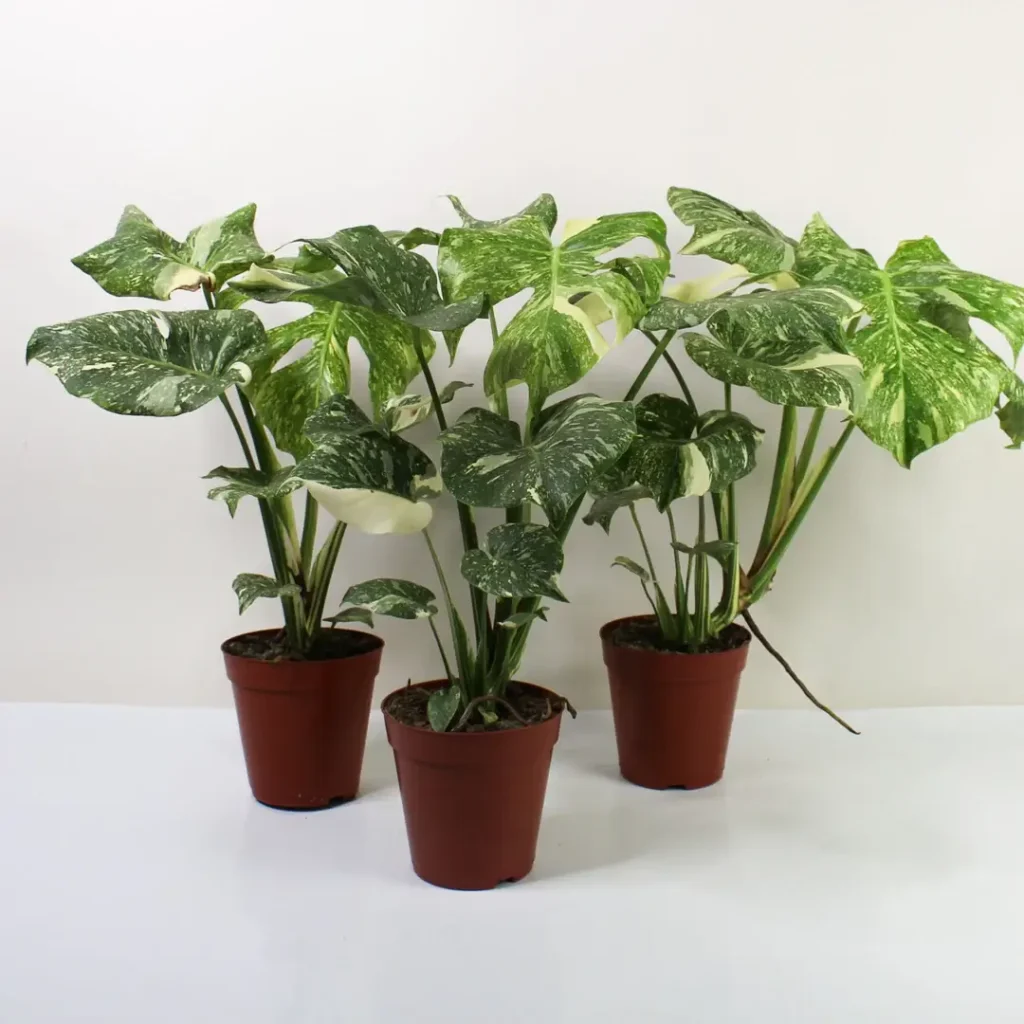
While Thai Constellation offers reliable, speckled variegation through stable genetic modification, its charm lies in its precarious sectoral chimerism – a random cell mutation that resists commercial replication.
Where Thai Constellation grows with predictable vigor, Crème Brûlée develops at half-speed, its caramel variegation demanding exacting light levels to avoid regression.
The former represents botanical consistency; the latter embodies nature’s high-stakes improvisation.
| Differentiating Factor | Thai Constellation | Crème Brûlée |
|---|---|---|
| Genetic Origin | Stable lab-induced mutation | Natural sectoral chimera |
| Pattern Consistency | Predictable constellation speckles | Random caramel swathes |
| Growth Rate | 4-6 leaves annually | 1-2 leaves annually |
| Light Response | Maintains white variegation | Develops amber tones under 400+ FC light |
| Propagation Success | 90% stable cuttings | <15% stable cuttings |
How To Care Monstera Crème Brûlée?
Preserving its variegation demands microenvironment precision unseen in common houseplants.
Lighting functions as both muse and executioner – sufficient intensity develops caramel tones, yet direct sun scorches delicate tissues within minutes.
Humidity becomes a non-negotiable currency, with fluctuations below 75% triggering immediate reversion to green.
Root systems require aeration-focused substrates to prevent the root rot that claims 40% of specimens within their first year.
This high-wire act of cultivation separates casual owners from serious conservators.
Optimal Growth Parameters
| Factor | Ideal Range | Danger Threshold | Correction Protocol |
|---|---|---|---|
| PPFD Light | 400-600 μmol/m²/s | >800 μmol/m²/s | Diffuse with 40% shade cloth |
| Day Temp | 75-80°F (24-27°C) | >85°F (29°C) | Pebble tray evaporation cooling |
| VPD | 0.8-1.2 kPa | >1.5 kPa | Humidifier + air circulation combo |
| Soil EC | 1.2-1.8 mS/cm | >2.5 mS/cm | Flush with distilled water |
The Secret Behind the Name Crème Brûlée
The plant’s namesake dessert relies on equally precise chemistry.
Custard setting hinges on egg proteins denaturing at 170-175°F (77-80°C) – a narrow window where insufficient heat creates soup, while overexposure curdles textures.
Caramelization demands ultra-dry surfaces for sugar crystallization; even ambient humidity can sabotage the signature crackle.
Understanding these reactions transforms dessert preparation from recipe-following to controlled science.
Custard Failure Analysis
| Problem | Molecular Cause | Solution |
|---|---|---|
| Curdling | Overheated egg proteins bonding too tightly | Temper eggs with cool cream before heating |
| Weeping | Excess moisture dissolving sugar crust | Chill to 40°F (4°C) before torching |
| Graininess | Sugar crystallization before full melting | Use superfine sugar + torch in circular motion |
| Soft Set | Undercooked custard (below 165°F/74°C) | Water bath at 300°F (149°C) for 35 minutes |
Plant & Dessert Lifespan: How Long Does Crème Brûlée Survives?
Both namesakes share fragility despite apparent robustness. The dessert’s shelf life battles lactose crystallization and microbial growth, optimally consumed within 72 hours of preparation.
Conversely, the plant’s viability extends for decades but requires perpetual vigilance against variegation loss.
Where pastry chefs combat starch retrogradation, horticulturists wage war against genetic regression – two disciplines united by the Crème Brûlée namesake’s demand for perfection.
Longevity Comparison
| Aspect | Monstera Crème Brûlée | Crème Brûlée Dessert |
|---|---|---|
| Prime Condition | 2-5 years with optimal care | 6-48 hours post-torching |
| Preservation Method | Tissue culture propagation | Vacuum-sealing pre-torching |
| Degradation Sign | Green reversion >40% of leaves | Moisture beads on surface |
| Failure Point | Night temps <68°F (20°C) | Storage above 40°F (4°C) |
“True mastery of Crème Brûlée – whether plant or pastry – lies not in forcing perfection, but in orchestrating conditions where ephemeral beauty can briefly thrive.”


