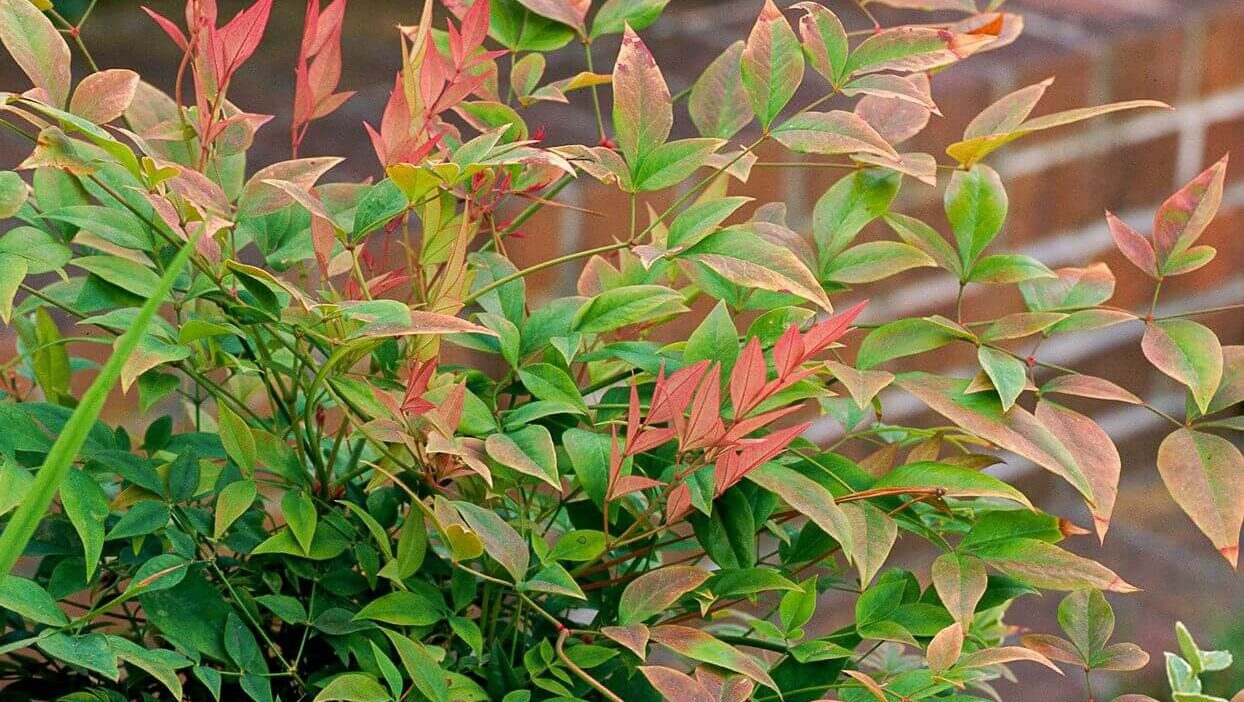
Heavenly Bamboo plant (Nandina domestica), despite its common name, is not a true bamboo but an evergreen shrub in the Berberidaceae (barberry) family.
Native to Eastern Asia, it was introduced to Western gardens in 1804 and is prized for its bamboo-like stems, seasonal foliage shifts (red/purple in spring, green in summer, crimson in winter), and clusters of red berries.
It thrives in USDA zones 6–10 and adapts to containers, borders, and ornamental gardens.
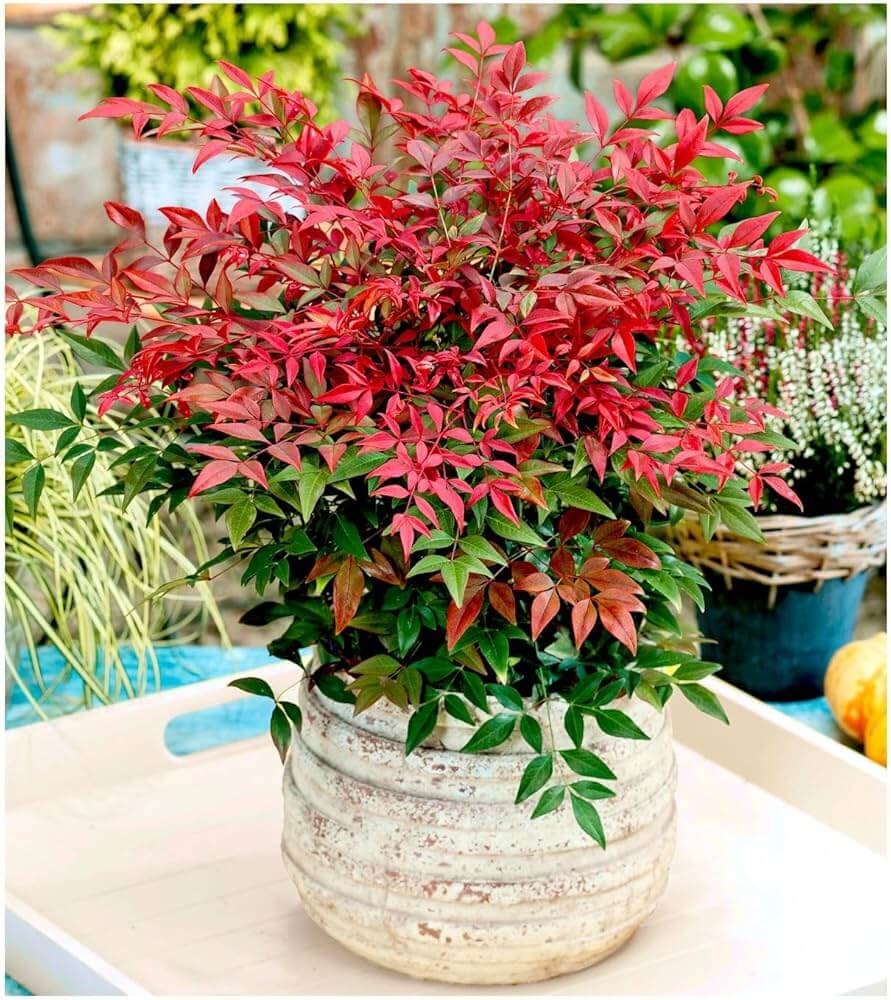
Table of Contents
Heavenly Bamboo Plant Growth Habits & Key Characteristics
- Height: 6–8 ft tall (standard varieties); dwarf cultivars (e.g., ‘Fire Power’) reach 2–3 ft.
- Growth Rate: Slow to moderate; takes 10–20 years to reach full height.
- Invasive Risk: Spreads via seeds and rhizomes. Invasive in FL, TX, and SE US—sterile cultivars (e.g., ‘Gulf Stream’) recommended.
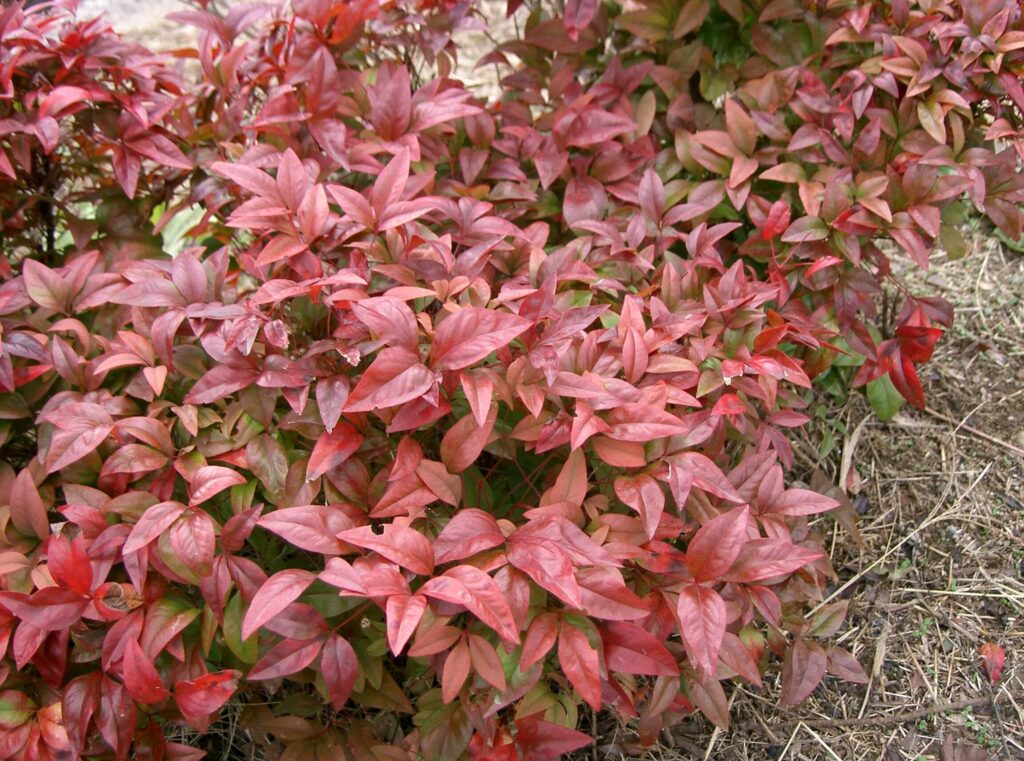
Seasonal Interest Table
| Season | Foliage | Flowers/Berries |
|---|---|---|
| Spring | Red/purple tints | Pinkish-white blooms |
| Summer | Pale green | Green → red berries |
| Autumn | Fiery red | Bright red berry clusters |
| Winter | Bronze-red | Persistent berries |
Planting & Care Guidelines For Heavenly Bamboo Plant
Soil & Light Requirements
- Soil: Well-drained, slightly acidic soil (pH 5.0–6.5). Amend clay soils with grit or sand.
- Light: Full sun to partial shade. Full sun enhances foliage color; partial shade acceptable in hot climates.
Watering & Fertilizing
- Watering: Deeply twice weekly for first 3 months; drought-tolerant once established. Avoid waterlogged soil.
- Fertilizer: Balanced slow-release formula (e.g., 10-10-10 NPK) applied in spring.
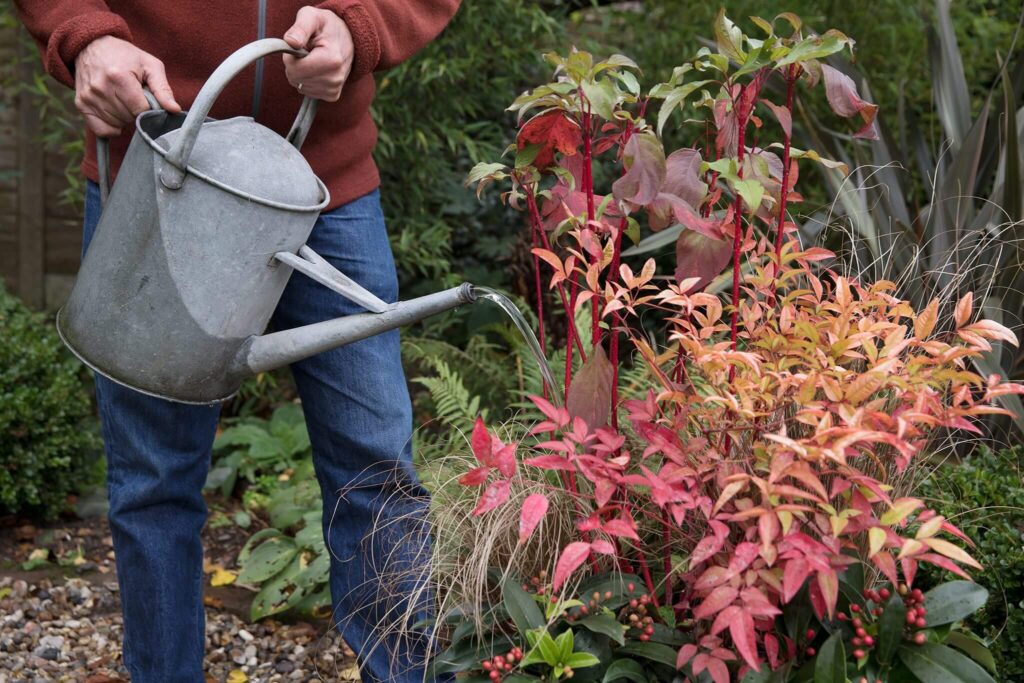
Discover Heavenly Bamboo Plant Pruning Techniques
Avoid shearing as it ruins natural form. Instead:
- Annual Thinning: Cut ⅓ of oldest canes to ground level in early spring.
- Height Control: Reduce tallest canes by half, snipping above a leaf node.
- Leggy Plants: Rejuvenate by cutting all canes to 6″ (works for overgrown specimens).
Dwarf Varieties: Rarely need pruning; thin congested canes if necessary.
You May Also Like: Pacific Rhododendron Pruning Tips, Colors, Care & State Flower Facts
Container Growing: Special Considerations
Potting Tips
- Container Size: Minimum 16″ depth with drainage holes.
- Soil Mix: 60% cactus/succulent mix + 30% perlite + 10% compost.
- Care:
- Water when top 2″ of soil is dry.
- Shield pots from freezing temperatures (move indoors in zone).
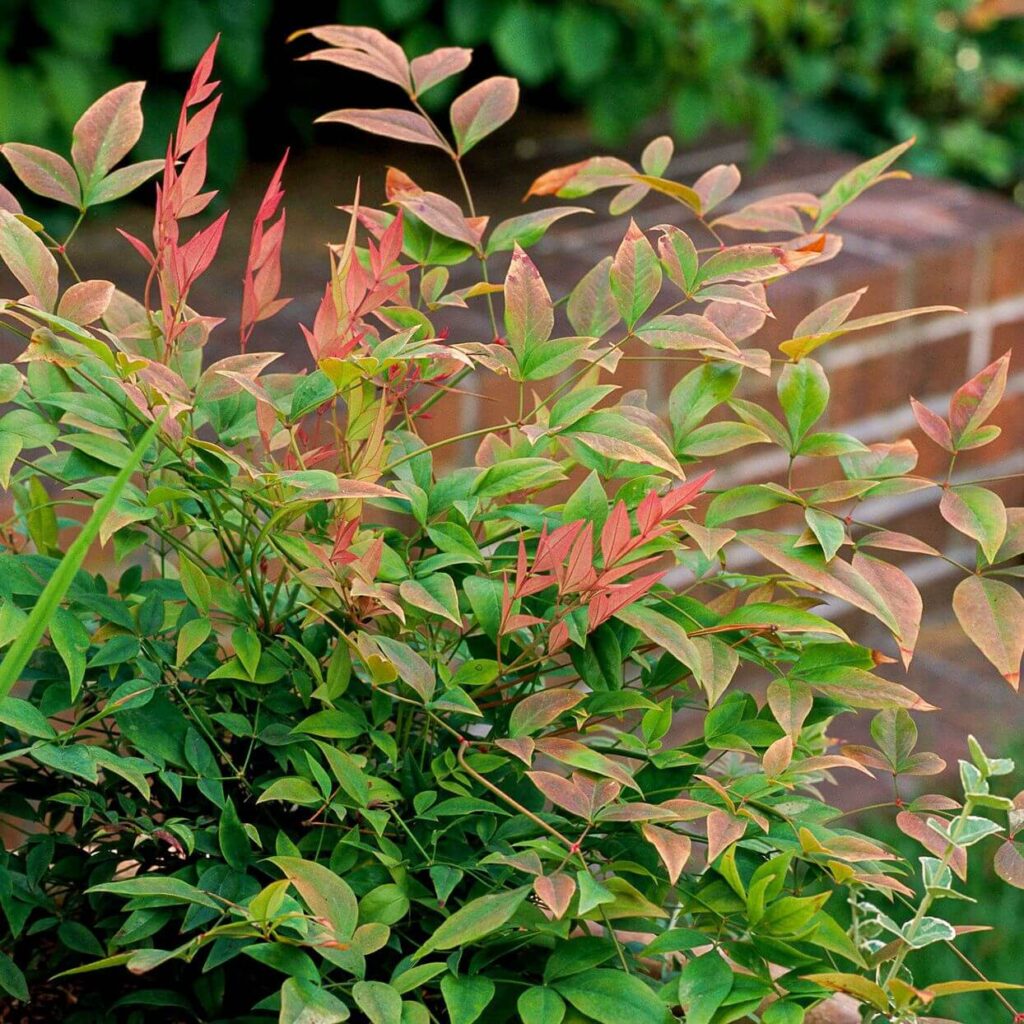
Indoor Growing
- Light: South-facing window or 1,000–2,000 lux grow lights.
- Humidity: Mist leaves weekly in dry climates.
Toxicity & Environmental Impact
- Berries: Contain cyanogenic glycosides, toxic to dogs, cats, and birds (e.g., Cedar Waxwings).
- Human Risk: Mild GI upset if ingested; non-lethal but avoid consumption.
- Ecological Threat: Berries spread by birds displace native plants. Sterile cultivars are eco-friendly alternatives.
You May Also Like: Poisonous Plants of the Pea Family: Florida Species, Toxins & Safety
FAQs: Critical Questions Answered
Q: How invasive is heavenly bamboo plant?
A: Highly invasive in warm climates (FL, TX). Plant berryless hybrids like ‘Fire Power’ to prevent spread.
Q: Are heavenly bamboo plant berries poisonous to humans?
A: Yes—can cause nausea/vomiting. Keep away from children.
Q: Can nandina grow in full shade?
A: Tolerates partial shade, but foliage color fades. 4+ hours of direct sun is ideal.
Q: How fast does dwarf heavenly bamboo plant grow?
A: Reaches 2–3 ft in 5–7 years.
Q: Best dwarf varieties for small spaces?
A: ‘Fire Power’ (fiery red foliage), ‘Lemon Lime’ (yellow-green leaves), ‘Obsessed’ (compact, vivid reds).
Invasive Management & Alternatives
Control Methods
- Mechanical: Dig out roots (remove all fragments); monitor for regrowth 27.
- Chemical: Apply glyphosate to cut stems (repeat treatments needed) 7.
Native Alternatives
- Southeast US: Florida hobblebush (Agarista populifolia).
- Southwest: Autumn sage (Salvia greggii) 7.
Key Takeaways for Gardeners
- Prioritize Sterile Cultivars to prevent ecological damage.
- Prune Correctly: Thinning > shearing for dense growth.
- Container Growing: Ideal for dwarf varieties in cold zones.
- Toxicity Awareness: Remove berries if pets/birds frequent garden.
- Sunlight Matters: Maximize sun exposure for intense foliage color.
“Heavenly bamboo’s allure lies in its multiseason drama but responsible cultivation ensures its beauty doesn’t come at an ecological cost.”
For verified toxicity data, consult the ASPCA Poison Control or Poison.org